

Building Scalable Market Access
The brokerage industry is changing quickly. Traditional FX and CFD businesses are facing pressure from new asset classes, changing client expectations, tighter margins, and more sophisticated trading behavior.
At the same time, crypto-native firms are moving into CFDs. Established CFD firms are expanding into crypto. Precious metals have become a major source of trading activity. Stablecoins are changing how some market participants think about settlement and funding.
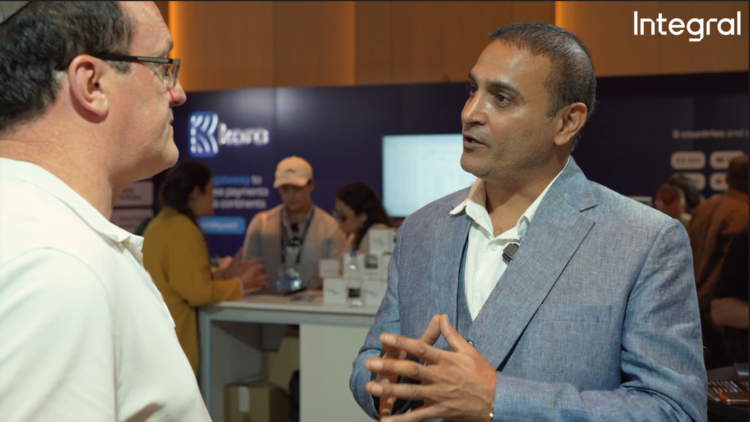
In a recent conversation with Integral, Rob Brown, Head of Strategy and Development at MAS Group, discussed how MAS Markets has approached this environment. The conversation covered multi-product infrastructure, liquidity relationships, technology decisions, crypto, precious metals, and the future of brokerage business models.
Watch the full Rob Brown:
The core message was clear: brokers can no longer rely on a narrow product set or a rigid technology stack. To compete, they need infrastructure that can adapt as client demand moves across markets.
Brokerages are building for multi-product demand
For many brokers, the traditional model was relatively straightforward. Offer a defined set of FX or CFD products. Use an off-the-shelf platform. Focus heavily on marketing, client acquisition, and retention.
That model is now under pressure.
Client demand can shift quickly from one product area to another. Precious metals may see a surge in volume. Crypto may become more important in certain regions. Traders may expect access to new products, faster funding methods, or more flexible connectivity.
As Brown explained, MAS Group has spent the last several years building the regulation, technology, relationships, and strategic partnerships needed to operate as a multi-asset brokerage. That includes access to liquidity across banks, non-bank providers, and multiple asset classes.
For brokers, this raises an important strategic question: should each product line sit in a separate business unit, or should the firm build a more integrated model?
There is no single answer for every firm. Regulatory requirements, client profiles, technology constraints, and regional needs all matter. But the direction of travel is clear. Brokers need to reduce friction for clients while maintaining the operational control required to manage complex products.
Why some off-the-shelf infrastructure can limit growth
One of the main themes of the conversation was scalability.
In the past, a broker could enter the market using a leased platform with relatively little technical investment. That made it easier to launch. But it could become limiting as the business matured.
A broker using a narrow, one-size-fits-all platform may eventually face several challenges:
- Limited ability to add new asset classes
- Fragmented systems across different business lines
- Higher third-party technology costs as volume grows
- Less control over connectivity and client experience
- Difficulty adapting to new settlement or funding requirements
This can create a difficult crossroads. The broker may need to rebuild its technology, bolt on separate systems, or accept that the business is becoming less competitive.
Brown noted the value of strategic technology partnerships with firms that have deep experience in electronic trading. Rather than building everything from scratch, forward-thinking brokerages use proven technology that supports multi-product strategies – crypto, FX, precious metals, and CFDs, build on top of it, and go to market quickly with broad connectivity.
That balance matters. Building technology from the ground up can be expensive and slow. But relying entirely on a generic platform can restrict the business later.
The more durable approach is to create a scalable foundation from the outset. That may include proprietary workflow control, strategic technology partnerships, or infrastructure that is designed to connect across multiple client systems and product types.
Product concentration creates risk
The conversation also touched on precious metals, particularly gold and silver. In recent market conditions, some brokers have seen significant order flow in metals.
That can be valuable, especially when volatility is high.
But concentration can also be dangerous.
A broker that depends too heavily on one product area may be exposed when client interest shifts. Retail trading demand often moves in waves. A product that is highly active today may not remain the dominant source of volume tomorrow.
That is why multi-product capability is not just a growth strategy. It is also a future-proofing strategy.
Brokers need to be strong across multiple products, not just excellent in one area. That requires:
- Access to the right liquidity providers
- Strong pricing relationships
- Product-specific expertise
- Hedging capabilities that spans every product offered
- Infrastructure that can support changing client demand
Silver is a useful example. As Brown noted, access and leverage can be more difficult in certain markets. A broker cannot simply assume that strong demand will translate into manageable risk. It needs the right market access and liquidity relationships behind the product.
Liquidity relationships are becoming more strategic
Liquidity is not just a procurement decision. It is becoming a strategic part of the brokerage model.
As clients become more sophisticated, brokers may need to hedge more activity. That changes the relationship with liquidity providers. A broker that previously used liquidity only occasionally for hedging may need deeper, more reliable access.
This is especially important when volatility rises or when the firm expands into products that have different clearing, settlement, or credit considerations.
Brown described the importance of treating liquidity providers more like partners than simple service vendors. That is particularly relevant for brokers that want to operate across FX, CFDs, precious metals, crypto, and other products.
The quality of those relationships can affect:
- Pricing
- Market access
- Hedging capacity
- Risk management
- Client experience
- The broker’s ability to scale volume
For B2B-focused firms, this is especially important because margins can be thin. As volume grows, the right technology and liquidity access become decisive for profitability – scalable infrastructure on a fixed subscription – not brokerage model – that keeps costs in check while supporting more flow.
Crypto is becoming more than a trading product
Another important theme was the role of crypto within brokerage infrastructure.
For many brokers, crypto started as another tradable instrument. Offering crypto CFDs was one way to meet client demand without operating a full spot crypto business.
But the conversation made clear that crypto can play a broader role.
MAS Group has a crypto business in Canada that supports on- and off-ramp services. In some regions, clients use stablecoins to move capital quickly to liquidity providers. MAS set up a crypto OTC desk to allow clients to deposit in cryptocurrencies and use that capital for trading traditional asset classes.
That is a different use case from simply offering crypto as a speculative product.
Crypto and stablecoins can also support:
- Faster payments
- Margin funding
- Cross-border capital movement
- Settlement workflows
- Client onboarding in certain regions
- Additional services around trading infrastructure
This does not mean every broker should become a crypto business. Regulation, custody, compliance, and risk management remain complex. But it does suggest that brokers should think carefully about where digital assets may fit into their broader infrastructure.
Ancillary services can strengthen client relationships
MAS Group has also looked beyond liquidity alone.
Brown discussed additional services such as crypto funding support, access to money market funds, and a regulated fund structure in Luxembourg that can allocate capital to successful traders. These services are designed to support clients beyond execution.
That matters in a competitive B2B market.
If multiple providers can offer similar pricing, brokers and trading firms will ask what else they receive. Additional services can help reduce friction, support client growth, and make the relationship more valuable and harder to replace.
Examples of value-added services may include:
- Funding and settlement support
- Access to yield on unused capital
- Capital allocation for successful strategies
- Operational support across asset classes
- Connectivity that works with the client’s existing systems
This is not about adding services for the sake of adding services. The goal is to identify practical client needs and build around them, focussing on the services your business can realistically support and deliver well.
Retail traders are becoming more sophisticated
The conversation also explored how the retail trading environment is changing.
AI-driven search, new data tools, automated analysis, prediction markets, and alternative asset classes are changing how traders access information. Retail traders may become more informed and more demanding as these tools improve.
That could affect broker risk models.
If traders become more sophisticated, brokers may need to hedge more flow. That may increase the importance of real market access, stronger liquidity partnerships, and more transparent execution models.
Brown pointed out that MAS Markets operates as a pure STP business. In that model, more successful traders can be beneficial because revenue is driven by client volume rather than client losses.
This is a meaningful shift in how some brokers may need to think about their business models. If the industry moves further toward execution-based revenue, tools that help traders perform better may become a positive force rather than a threat.
The future brokerage stack needs flexibility
The broader takeaway from the conversation is that brokerage infrastructure needs to be flexible by design.
A broker may not know which product will drive the next wave of client demand. It may be precious metals. It may be crypto. It may be prediction markets, tokenized assets, or another product category that is still developing.
What brokers can control is the infrastructure they build around that uncertainty.
A future-ready brokerage stack should support:
- Multi-product pricing and execution
- Strong liquidity aggregation
- Flexible connectivity
- Risk management across products
- Stablecoin and digital asset workflows where appropriate
- Scalable reporting and analytics
- Client access through APIs and third-party systems
- Faster adaptation to new market opportunities
The firms that can adapt quickly will be better positioned than those tied to a narrow product set or fragmented technology model.
Key takeaways for brokers and trading firms
The conversation with Rob Brown points to several practical lessons for brokers and trading firms.
- Build for product shifts, not just current demand
For instance, a strong metals business today does not remove the need for a broader product capability tomorrow. - Treat technology as a strategic decision
A one-size-fits-all, off-the-shelf system can help firms launch, but it may create limitations as the business grows. Make sure your technology partner supports multi-product and can scale in line with your business and client needs. - Liquidity relationships matter more as complexity increases
Trading operations that span multiple products requires reliable access, stronger partnerships, and the ability to hedge a correlated book as conditions change. - Crypto can be part of the operating model
Digital assets and stablecoins may support funding, settlement, and capital movement, not just trading. - Value-added services can differentiate providers
In a competitive B2B market, liquidity alone may not be enough. - Execution-based models may benefit from better traders
As tools improve, brokers with STP or market-access-focused models may be well positioned to support more sophisticated client activity.
Conclusion
The brokerage industry is entering a more complex phase. Asset classes are converging. Clients expect more flexibility. Technology cycles are faster. Liquidity relationships are becoming more important. Crypto and stablecoins are creating new operating possibilities.
For brokers, the challenge is not simply deciding which product to add next. It is adopting technology that can adapt as demand changes while future-proofing your business model to support new markets.
MAS Markets’ growth offers one example of how a brokerage can approach that challenge: combine strategic partnerships, scalable technology, multi-product access, and client-focused services. In a market where product demand can shift quickly, that kind of infrastructure may become one of the most important competitive advantages a broker can have.