

Monday
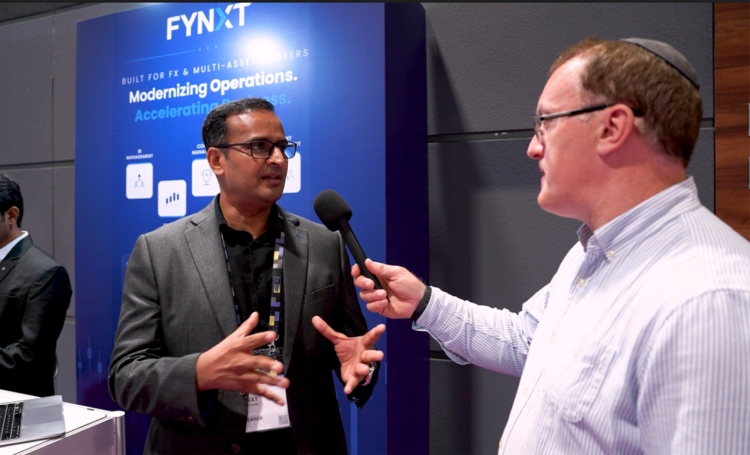
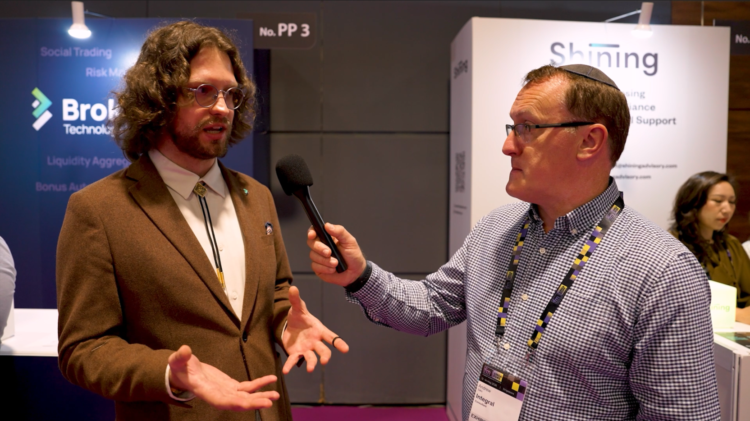
At the start of June, I began to look forward to the iFXEXPO in Cyprus later this month. It is worth remembering just how useful that event has been as a barometer for the evolution of global fintech in electronic trading.
The original iFXEXPO International in Cyprus was not merely another conference on the circuit; it became the defining venue for FX. I was there at the very first one in 2013, covering the panels and the wider atmosphere, and even then, when tech development was still in a far earlier phase, there was already serious discussion about infrastructure, connectivity, and the underlying mechanics of brokerage technology.
By 2016, the message had become clearer. The affiliate-style front-end model, with its rev-share structure and its inherent limitations, was already being recognised as a brake on progress. As Integral CEO Harpal Sandhu said at iFXEXPO Cyprus in 2016, working with a technology provider that will never compete with the broker, and that can provide a fully integrated stack under the broker’s own name, gives firms real power. That observation was then, and remains now, absolutely right.
Yet in 2026, there are still legacy systems holding brokers back, forcing them into lead-churning structures and leaving them overly dependent on vendors. What stands out about the iFXEXPO in Cyprus in recent times is not the old sales-and-marketing spectacle, but the much broader range of third-party dynamic tools on display. Cyprus used to be an aircraft carrier for lead generation; now it is a showcase for the full infrastructure stack. The question for brokers is simple: can their systems actually integrate what senior executives are talking about on panels and showcasing at expos?
FX is no longer a sales and marketing business. It is an API business, and increasingly a technology integration business.
Tuesday
A quick lunchtime catch-up with Ethan Chan, Executive Director of INFINOX, cut straight through to the structural differences between markets.
The discussion covered how trading appetite is shaped not just by regulation or product choice, but by the rhythm of daily life. Ethan made a point that is hard to dispute: one of the reasons China has made such extraordinary leaps across industries is its relentless investment in infrastructure—technological, logistical, and urban. Everything is set up to make life easier, faster, and more efficient.
That combination of ultra-modern everyday infrastructure and a high level of education has accelerated automation across sectors, including trading. In regions where execution matters and time is treated as a premium asset, Introducing Brokers have learned to expect speed, flexibility, and control.
That is why legacy front ends are increasingly hard to justify. So too are rigid white-label structures that lock a broker into a single liquidity relationship chosen by someone else. The answer, as ever, is a fully comprehensive core backend with liquidity and venue agnosticism built in from the outset.
Wednesday
It was hard not to raise an eyebrow at the further mainstream advance of stablecoins this week.
What began as a crypto-native settlement tool is now being pulled into practical commercial use cases: payroll, procurement, ecommerce, and cross-border business payments. The partnership announced by BVNK and TransferMate makes that evolution plain. Stablecoins are no longer just a trading instrument or a DeFi curiosity; they are becoming backend financial infrastructure.
That matters because the customer experience around money movement is changing rapidly. The old tolerance for delays, correspondent friction, and T1/T2 settlement times is beginning to look increasingly dated. In a short time, the idea of waiting days for funds to clear may feel as archaic as faxed dealing instructions.
The appeal is obvious: immediate settlement, lower friction, and far lower transaction costs. For any business operating across borders, that combination is hard to ignore.
Thursday
Talking of DeFi, the market structure conversation is here again, this time toward continuous trading and around-the-clock participation.
Wall Street traders and traditional exchanges are increasingly looking outside the old market-hour model, and in some cases are using newer DeFi-native venues to do it. Hyperliquid, a relative newcomer by the standards of the traditional buy-side and sell-side world, is already being used by established institutions for perpetuals and related products.
That alone should give pause to market participants in the non-bank electronic trading sector. The lesson is not simply that crypto has become important; it is that infrastructure now has to be flexible enough to support directional shifts as they happen.
The broader point is this: product innovation is no longer enough. Firms need backend trading infrastructure that can keep pace with a market that is becoming less segmented and more continuous. The institutions that understand this will adapt early. The others will find themselves reacting from a distance.
Friday
Looking back through the week’s reports, one theme stood out. A senior industry figure in Singapore made the point that the market is moving away from one-size-fits-all trading systems and toward specialised infrastructure connected through a common framework.
That is exactly what has been happening for some time. First came the options and futures rush around 3 years ago, then spot crypto, and now the next wave is being shaped by AI-native workflows and increasingly bespoke front ends. In a world where people who were not previously coders are now building their own dynamic tools using AI-based software builders, legacy interfaces that try to do everything for everyone but restrict progress in doing so are looking more and more obsolete.
TradingView is a useful example. Its popularity among traders has created a real appetite for broker integration, and that cannot be handled properly on a rigid, all-purpose platform. My recent visit to Phillip Nova’s offices in Singapore reinforced that point: institutional-grade, highly adaptable infrastructure is not a luxury anymore, it is a requirement.
There will be more on that in my upcoming podcasts and reports, stay tuned.