

Monday: Conflicts of interest are back in focus
A major brokerage with global offices has just completed part of a restructure, with its former CTO now stepping into the CEO role. It raises a question the industry has in many cases avoided – who really controls the brokerage relationship? Is it the broker, or the vendor?
For many years, a proportion of brokers have relied on legacy technology that quietly created conflicts of interest. Vendors were not just supplying infrastructure, they were also earning revenue shares, volume fees, and gaining access to, or even hosting, broker trading data. That is not a neutral arrangement. It blurs the line between provider and competitor.
The problem becomes even more obvious when a vendor starts behaving like a brokerage itself. At that point, the broker is no longer the true owner of its own business model. It becomes, in effect, a distribution channel for the vendor’s ambitions – restricted to a closed model that limits flexibility, slows innovation, and makes scaling more expensive than it should be.
A vendor’s proper role is not to insert itself into the economics of the brokerage. Its job is to provide the backbone: a stable, modular foundation that allows the broker to connect through a comprehensive API to multiple liquidity sources, front ends, and third-party systems.
The moment a vendor insists on controlling the economics of a brokerage, the broker begins to serve the vendor, not the other way around.
Tuesday: Stablecoins are moving from theory to everyday finance
Coinbase and Flipcash announced the launch of USDF this week – a USD stablecoin issued on Solana and fully backed by USDC.
This is exactly the direction Integral CEO Harpal Sandhu pointed to when he spoke at the Finance Magnates London Summit last September. His message was clear: the winners will be the institutions that treat stablecoins not as a product line, but as the foundation of a new market structure.
The launch of PrimeOne, Integral’s stablecoin-based prime brokerage, and its on-chain credit facility were early signals of what is now becoming obvious: tokenised dollars can remove counterparty risk and bring real-time settlement into areas that have historically been slow and costly.
When the cost and delay of moving value collapse, entirely new business models emerge. We are now watching that thesis play out in real time. As stablecoins go mainstream, customers will increasingly expect faster settlement, lower friction, and fewer of the legacy costs that have long been accepted as unavoidable in financial markets.
The direction of travel is clear: stablecoins are not just changing payments; they are changing market structure itself.
Wednesday: Are YOU ready for AI-driven automation of multi-market trading?
A conversation this week with Luka Knezic, an options trading automation specialist, reinforced a point that keeps surfacing across the industry: brokerages must embrace agility, with robust API connectivity enabling seamless integration of dynamic third-party tools.
His focus is entirely on building an AI-based automation system – and his insights extend well beyond trading platforms. Operations, marketing, sales and client experience all stand to be transformed.
Retail brokers unable to offer venue access and automation capabilities will inevitably become legacy operations. The infrastructure question is straightforward: can your back end connect to third-party AI systems and MCP Servers — the secure gateways between AI agents and the data they need to function — without a rebuild? If not, the automation wave will pass you by.
Thursday: Are you paying a ‘tax’ for having fragmented trading systems?
A recent white paper from TradingTech Insight compiled by A-Team Group makes a point that will resonate with anyone running multiple trading systems across different asset classes.
The “silo tax” — separate teams, distinct technology stacks, and duplicated protocols for various product ranges — has plagued institutional trading for decades. A unified back end handling FX, crypto, CFDs and other asset classes is simply more efficient than maintaining separate systems and teams for each.
The white paper identifies a common foundational layer as non-negotiable — one that normalises data at the application level and allows firms to aggregate liquidity across multiple providers without duplicating teams or systems. Firms that retain flexibility to test new liquidity providers or build custom solutions while maintaining that common foundation will be better positioned than those locked into asset-specific stacks.
Those trapped in siloed, asset-specific stacks aren’t just paying the silo tax — they’re discovering that fragmented foundations cannot support the agentic future at all.
Friday: London’s Shift Toward Comprehensive Trading Infrastructure
This week’s inaugural SG Investment Networking event in London brought together an interesting cross-section of the industry — wealth managers, prop traders, VC investors and AI coders who programme their own systems and trade multi-product portfolios on behalf of clients.
The consensus was clear: the generic front-end-first CFD business model built on buying leads, conversion funnels and retention is obsolete. The professionals now frequenting these discussion forums across London and global financial centres aren’t the old lead marketers. They’re combining wealth management principles with automated trading across all traditional and digital assets.
To serve this cohort, firms need back-end infrastructure that normalises data flows, supports modular liquidity integration, and allows clients to deploy proprietary code against institutional-grade execution venues.
The question for brokers is straightforward: what infrastructure investments are you making to serve this next generation of sophisticated clients?
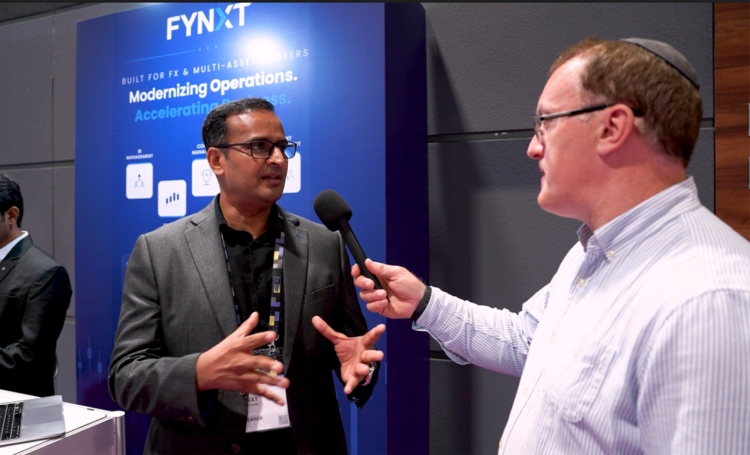
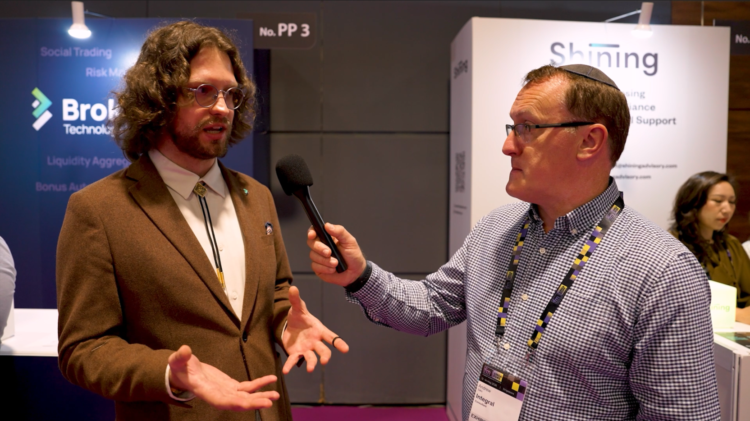
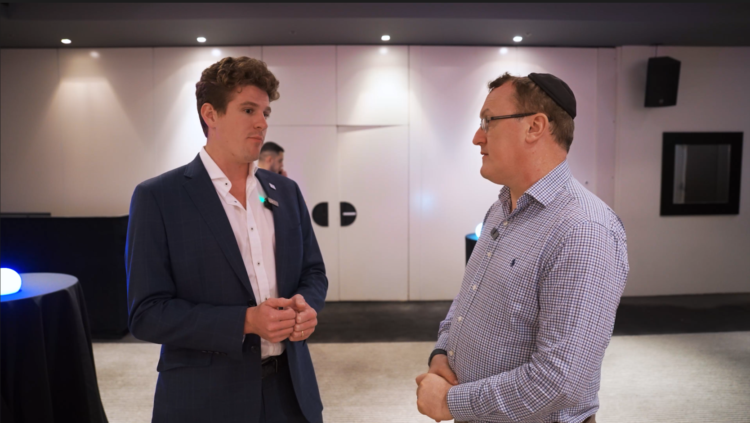
Look out for video interviews with executives who attended the event, coming in the next few weeks.