

How FX Brokers Can Avoid Technology Vendor Lock-In
The technology that helps an FX brokerage launch may not be the technology that allows it to scale.
A packaged platform can give a brokerage a faster route to market. But as the business grows, it may need greater control over its trading infrastructure, client experience and counterparty relationships.
At that point, the limitations of the original technology arrangement can become more apparent. The broker may be tied to a particular front end, restricted to certain liquidity relationships or increasingly dependent on systems controlled by its vendor.
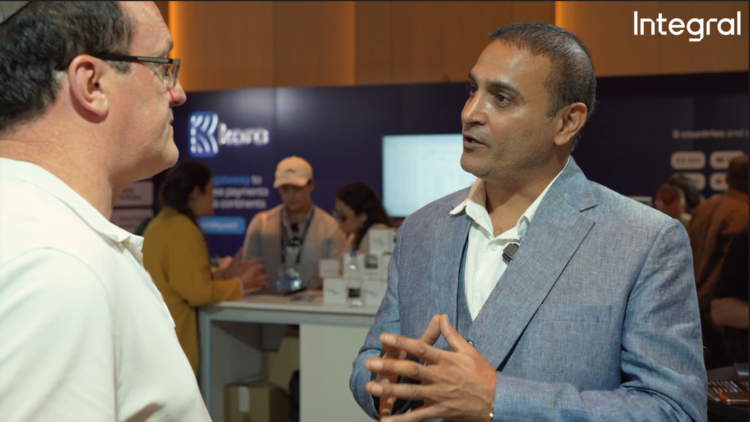
At iFX EXPO International in Limassol, Integral’s Andrew Saks discussed these risks with Marina D’Angelo, Head of Europe at DLT LAW. Their conversation explored where the line sits between providing technology and becoming involved in brokerage activity—and why that distinction matters for growing firms.
When does a technology provider become more than a technology provider?
The distinction between a technology provider and a participant in brokerage activity is not always clear.
A traditional software provider licenses a platform in exchange for an agreed fee. The brokerage then uses that technology to connect with its chosen venues and operate its business.
The relationship becomes more complicated when the technology provider begins to participate in the economics or execution of trading.
That might include:
- Charging fees linked to trading activity
- Bringing trading parties together
- Facilitating transactions
- Operating an order book
- Participating in revenue-sharing arrangements
D’Angelo explained that a technology company may describe itself as a software provider while gradually moving into activities that begin to resemble brokerage or other regulated functions.
The key question is not necessarily whether the provider offers execution, venue or other complementary services. It is whether those services are clearly identified, appropriately structured and distinct from the underlying technology relationship.
Brokers should understand which entity performs each function, how that activity is regulated and whether participation is optional.
The precise regulatory position will depend on the activity and jurisdiction. However, once a provider begins facilitating transactions or creating trading relationships, the responsibilities of each party need to be clearly understood.
Why an agnostic back end matters
From a technology perspective, Saks argued that a brokerage is better positioned when its core trading engine is not tied to a specific liquidity provider or client-facing platform.
An agnostic back end allows the brokerage to choose how it connects to the market and how it presents its services to clients.
It can also reduce the risk that the firm’s proprietary workflows, integrations and client experience become inseparable from a single vendor’s platform.
In the interview, Saks contrasted this with a generic, all-in-one system in which the technology provider controls the available front end and limits the broker’s ability to move beyond what is included in the package.
That type of arrangement may be convenient initially. Over time, however, the brokerage may find that it cannot expand its product range or develop its technology in the direction it wants.
A more flexible infrastructure gives the brokerage greater control over:
- Its liquidity and venue connections
- Its client-facing experience
- Its proprietary workflows and integrations
- The future direction of the business
The goal is not necessarily to build or host every component internally. Cloud-based and externally managed infrastructure can offer important advantages.
The more important consideration is whether the brokerage can access its data, connect other systems and make meaningful changes without being unnecessarily constrained by its vendor.
The commercial model can create conflicts
Technology vendor lock-in is not only a technical problem. It can also be created by the provider’s commercial model.
A brokerage may begin with relatively low platform costs. As its trading activity grows, however, it may pay increasingly large fees to the same provider.
That can happen when pricing is tied to transaction volume or when the vendor receives payment for order flow, revenue shares or other trade-related compensation.
The result is a relationship in which the provider is not simply being paid to license software. It may have a direct economic interest in the brokerage’s trading activity.
Saks described this as a potential conflict of interest. The broker’s growth can result in higher payments to a vendor that also controls important parts of the brokerage’s architecture and client environment.
By contrast, a clearer arrangement would involve transparent pricing and a commercial model that allows the brokerage to make its own decisions about counterparties, execution and growth.
Brokers should therefore examine more than the initial price of a platform. They should understand how the provider’s revenue will change as the brokerage grows and whether the vendor participates in the economics of trading.
Vendor lock-in becomes harder to address as a brokerage grows
A restrictive technology arrangement may not create immediate problems.
The brokerage can still acquire clients, increase volume and establish its position in the market. The difficulty arises when the firm reaches a level at which its existing structure no longer supports its ambitions.
Changing technology at that stage can require much more than replacing a piece of software.
The brokerage may need to move its client base to a new environment, introduce a different front end and restructure important parts of its operation. Clients that have become familiar with one setup may need to adapt to another.
The larger the brokerage becomes, the more disruptive that transition can be.
During the interview, D’Angelo noted that smaller firms are often still working through these questions. The risks may only become clear when the brokerage realizes it could be crossing a regulatory boundary or when new counterparties begin examining the arrangement more closely.
This is why technology decisions should be evaluated in the context of the brokerage the firm intends to become—not only the brokerage it is today.
Technology structure can affect access to institutional counterparties
As a brokerage grows and begins working with more sophisticated counterparties, its technology arrangement may receive greater scrutiny.
Banks, tier-one market makers and other institutional entities are generally risk-conscious. Their legal and compliance teams may want to understand how the brokerage operates and which parties perform each function.
If the structure appears unusual, they may request a legal opinion.
D’Angelo explained that a brokerage unable to provide a satisfactory explanation could close itself off from that institutional business. It may reach a level at which it cannot continue growing without addressing the structure behind its technology.
This makes infrastructure a counterparty issue as well as a technology issue.
A brokerage should be able to explain:
- Which entity provides the technology
- Where client and trading data is stored
- Whether the vendor facilitates trades
- How the provider is compensated
- Who is responsible for each regulated activity
The fact that infrastructure is hosted by an external provider is not inherently problematic. What matters is whether the arrangement is transparent, appropriately structured and capable of satisfying counterparty due diligence.
A structure that is difficult to explain can become a barrier when the brokerage seeks relationships with more conservative counterparties.
Control over the client experience is also at risk
The interview also highlighted how vendor restrictions can affect a brokerage’s ability to differentiate its client-facing technology.
Saks described a brokerage that used a generic, off-the-shelf platform but developed its own mobile application. The firm wanted greater control over its branding and client experience.
After investing in the application, it was reportedly instructed by the vendor to stop using it and return to the provider’s generic version.
That left the brokerage unable to publish and control its application in the way it had intended. It also meant that the client experience remained similar to that of other firms using the same platform.
The example illustrates a wider issue.
A brokerage may believe it controls its brand while the vendor still determines how much flexibility is available within the client experience.
That does not mean every broker needs to develop an entirely independent front end. Configurable white-label interfaces may provide the differentiation and control the firm requires.
Before committing development resources, however, a brokerage should understand the options available through configurable interfaces, APIs and approved custom integrations.
It should also confirm what it is contractually and technically permitted to build around the underlying platform.
Build for long-term control
External technology can help an FX / CFD brokerage enter the market efficiently. The risk arises when convenience becomes dependency.
A brokerage should understand whether its provider’s technology, execution and venue services are clearly separated and transparently structured. It should also consider whether the platform allows the firm to control its proprietary workflows, choose its counterparties and develop a differentiated client experience.
These questions become more important as the brokerage grows.
A platform that appears sufficient at launch may create commercial, technical and regulatory constraints later. By that stage, migrating clients and restructuring the business may be substantially more difficult.
The right infrastructure should provide operational transparency and commercial alignment. It should give the brokerage control over its counterparties, workflows and strategic decisions without requiring the firm to build every component itself.
Technology should not simply help an FX brokerage operate today. It should give the firm the flexibility to determine how it grows tomorrow.
Watch the full conversation between Integral’s Andrew Saks and Marina D’Angelo of DLT LAW for more on the legal and commercial considerations involved in choosing brokerage technology.