
What seems to be an easy part of brokerage growth on the surface is often what is visible from the outside. Digital marketing campaigns and affiliate structures which brokers rely on for many years now.
The hard part is what separates firms that scale from those that stall, and that part is quieter, structural and annoyingly complex: the structure which turns first‑time depositors into long‑term, fee‑generating clients.
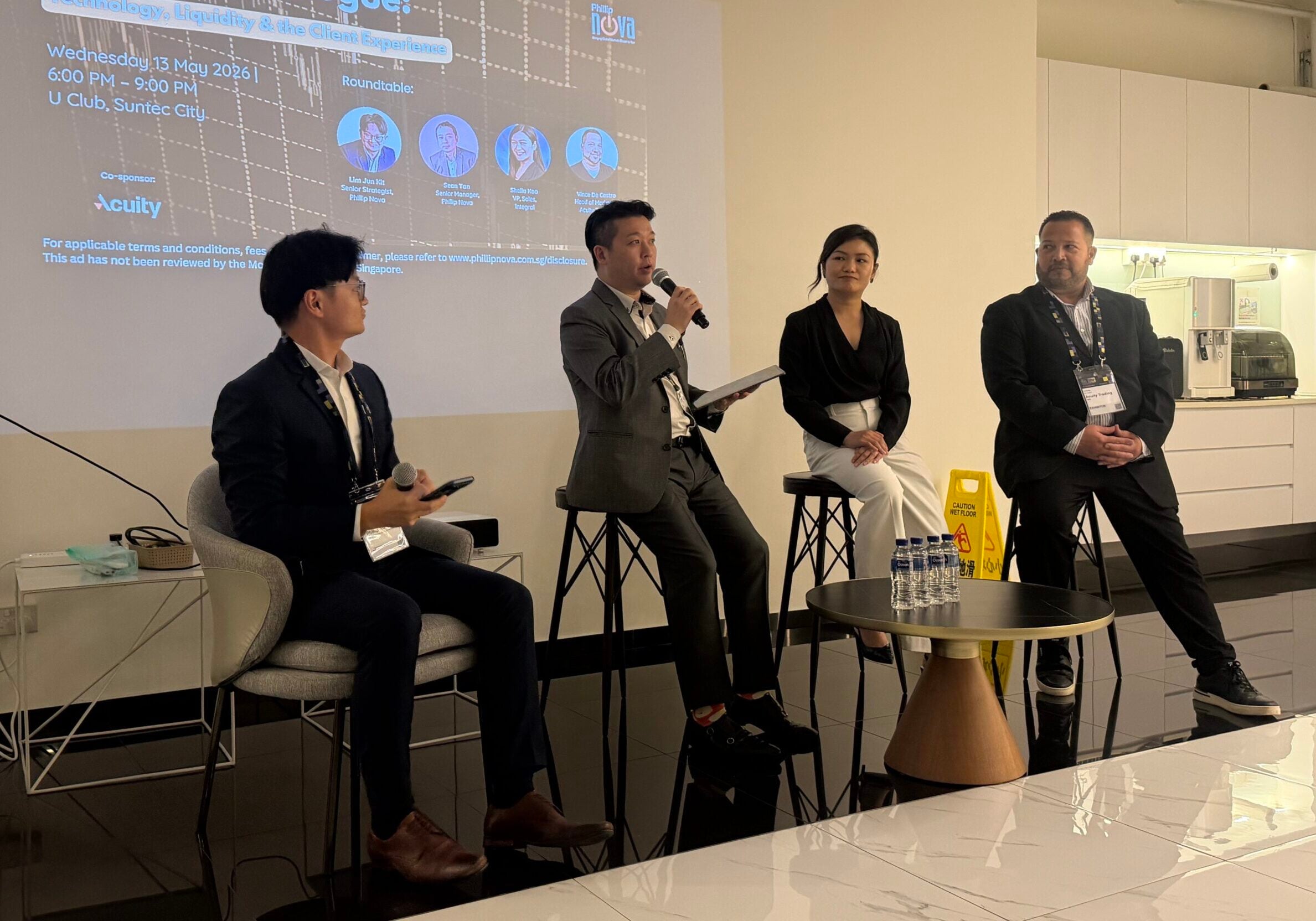
Hosted by Phillip Nova in Singapore, the roundtable brought together industry leaders to discuss how brokers can build long-term client relationships in an increasingly competitive and technology-driven environment. The discussion explored why client retention has become a strategic priority, extending far beyond acquisition and beginning long before a client places their first trade.
Moderated by Lim Jun Kit of Phillip Nova, the session brought together Sean Tan (Phillip Nova), Vince De Castro (Acuity Trading) and our own Sheila Koo (Integral) to look at what tech, liquidity and client experience actually means when the market is going through periods of high volatility, margins are tight and trader expectations are shaped by super‑app consumer design.
Start with the Customer: Expectation has Changed
Sheila made an opening point that was simple and decisive: users expect the same fluid, personalised experience in trading that they get elsewhere in their lives when banking, shopping or traveling. She explained that brokers are reasonably good at getting clients through the door; far fewer are investing in what comes next. “It’s not enough to build an attractive front end,” Sheila said. “You have to ask: what are we doing with the clients once they start trading?”
Sean noted that clients today expect seamless access across multiple asset classes, supported by intuitive technology and timely market insights. As investor needs become more sophisticated, brokers must evolve beyond providing market access alone and focus on delivering a complete trading experience. That shift changes the product mix and raises expectations around execution, inventory and post‑trade services.
Clarity, not Noise. Research and Signals that Actually Help
Steering the discussion towards information overload, Jun Kit asked whether the growing volume of market data was helping traders make better decisions or simply creating more noise. Vince’s answer echoed a reality most of the room recognised: quantity without curation is a liability. Too many signals delivered at once create analysis paralysis; the value is in clarity and timing. Tools that surface the right signal at the right moment, what Vince calls tailored insights, turn information into an operational advantage.
Retention is Everyone’s Problem
A moment that landed with the room was when Jun Kit asked who owns retention. Sheila was unequivocal: retention is not a single team’s KPI, it is shared across all areas of the brokerage business and technology infrastructure including front‑end UX, research, risk, liquidity, operations, all of them.
The appearance of a low spread is meaningless if liquidity management systems reject orders, slippage is rampant, or platform outages are frequent. Traders judge the entire lifecycle: reliability of execution, platform consistency over time, and the ability to fulfil promised outcomes.
The market is demonstrating this behaviour change via acquisitions and new verticals: prop desks buying brokerages and FTMO’s move to broaden services are examples of firms internalising the lifecycle to control retention end to end. Sean put it in commercial terms: retention must be profitable, if it doesn’t add to the bottom line, it won’t survive the next cost review. Vince pushed the same point from the user journey side: retention is earned by making the entire trader experience consistently positive.
Where Tech Breaks Down and How that Kills Trust
Jun Kit’s question on “where does broker tech let companies down?” drew a catalogue of recurring failure modes from Sheila.
The invisible fragility of many stacks is striking. Systems that work on calm days but collapse under stress; fragmented setups where risk engines, liquidity management and execution layers do not talk in real time; human‑heavy operational processes that create post‑trade bottlenecks and manual reconciliations. The SNB event remains the cautionary tale — firms with brittle integrations lost clients overnight, while others survived because their plumbing was sound.
A “quick fix” may tick a product box but won’t survive stress testing, Sheila warned. If margining, risk limits and routing decisions depend on stale or inconsistent data, decisions happen on opinions rather than facts. That’s not an edge; it’s an existential risk.
Execution is Not One Size Fits All
When clients ask for “better execution” they mean very different things depending on strategy. Sean put it well: a scalper chasing a 1–5 pip edge has fundamentally different requirements from a corporate hedger seeking firm RFQs and predictable slippage profiles. Brokers therefore need a nuanced view of execution quality: spread is part of it, but so are fill rates, rejection statistics, latency distribution and the reliability of routed counterparties.
Personalisation and Brand as Differentiation
So if everyone chases tight spreads and fast UX, where does a firm stand out? The panel agreed that personalisation, brand trust, and true IP in the UX are decisive. Sheila emphasised that personal outreach — emails and contact that genuinely reflect client behaviour and needs — separates commodity platforms from sticky ones. Clients have moved from asking “which LP can I add?” to “can you compose a liquidity mix that gives my clients the best experience?” That shift from product laundry lists to tailored liquidity mixes is a strategic rather than tactical conversation.
Operational Prerequisites: APIs, Multi‑Currency, and Resilience
Several practical points emerged as non‑negotiables. Brokers must:
- Run institutional‑grade APIs that connect the front end to LPs, risk systems and settlement partners in real time.
- Support multi‑currency and local pricing units where market demand requires it (SGD per gram, for example).
- Maintain a liquidity management function and credit lines with LPs that can be activated during stress.
- Reduce manual post‑trade processes and automate confirmations and reconciliations to avoid human bottlenecks in flash events.
These are not boutique features; they are baseline capabilities for staying in the market.
The Commercial Reality
Sean’s commercial framing that retention must be profitable is important because it forces priorities. Spending on UX without addressing the back‑end causes diminishing returns. Conversely, investment in the stack that reduces slippage, increases fill rates, and stabilises execution quality pays dividends through client lifetime value.
The final note, from Jun Kit and echoed by all, was that this is not about a single vendor or department. Reputation, brand differentiation, multi‑product capability and robust funds handling all matter. The firms that will win are those that treat retention as a company‑wide mission, invest in resilient plumbing, and design a front end that expresses a genuine, data‑driven understanding of their clients.
In short: acquisition gets them through the door; infrastructure keeps them inside.
Brokers who still think a prettier UI and a tighter spread is a competitive strategy are learning the hard way that modern trading is an end‑to‑end discipline. The name of the game now is integrated tech, intelligent liquidity orchestration and a personalised client journey that holds up under stress. That’s how you build not just customers, but careers.
The Key Takeaway
The discussion underscored a common theme among the panelists: while spreads and platforms remain important, long-term client retention increasingly depends on the ability to deliver a consistent experience across technology, execution and service. For brokers navigating an increasingly competitive landscape, the challenge is no longer simply attracting clients, but earning their trust over time.