

Monday: Prediction Markets: A volatile fad or new direction?
There are weeks in this business when the market tells you nothing you did not already know, and then there are weeks when it quietly hands you a reminder that every new product, every supposedly frictionless innovation and every “next big thing” eventually has to survive contact with the world as it actually is. That was much of the story this week.
Prediction markets, which only recently began to acquire the kind of gravity that makes people in this industry sit up and ask whether they are a passing curiosity or a genuine new asset class, were forced into the far less glamorous business of being tested by geopolitics. Late last year, when the subject was beginning to gain traction and our own Vikas Srivastava was talking about it with characteristic foresight at Integral’s brokerage event in Sydney, it felt like one of those themes that had energy but still needed a catalyst. It has now found one, though not exactly in the way anyone would have preferred.
The U.S. and Israeli strikes on Iran turned prediction markets from a talking point into a stress test. On Polymarket, more than $500 million was traded on contracts tied to possible U.S. military action, which tells you both that there is real demand here and that the appetite for event risk can become quite extravagant when the world obliges with actual events rather than theoretical ones. That same sudden burst of interest, however, also brought with it the sort of questions that tend to follow anything which grows quickly and attracts money. Bubblemaps flagged several new accounts that appeared to make around $1 million on strike-related bets only hours before explosions in Tehran. That may or may not be insider trading — and one should be careful about assuming the worst when war speculation had already been circulating — but it is the sort of pattern that makes regulators reach instinctively for their glasses.
Prediction markets like to present themselves as a cleaner, faster, more democratic way of pricing the future. That is all very well until the future turns out to be a missile strike.
Tuesday: Cyprus FX talent merry-go-round turns toward crypto
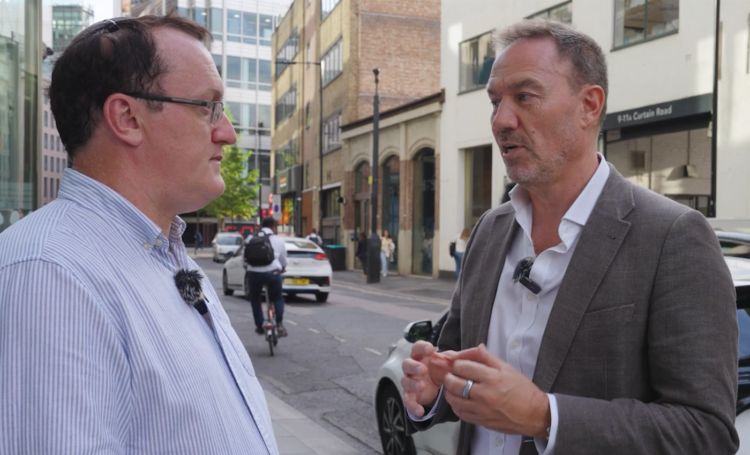
My attention was once again focused on Cyprus which remains one of those rare places in our industry where the entire history of a sector can be read in the streets.
For years, Limassol was shorthand for FX, and not in some abstract, market-structure sense, but in the very physical, corporate-geographic sense of big offices, compliance people, MetaTrader specialists, relationship managers and the endless talent circulation that became the island’s real economy.
When I first watched Limassol’s FX industry begin over 20 years ago, it still had the feel of a town that had yet to discover what it wanted to be. People imported their own cars from the UK or Japan due to no developed dealer networks, international brands of items were not available, and there was still a sense that, outside tourism and a handful of local businesses, the island had not yet fully connected to the globalised, brand-saturated lifestyle that its residents were plainly going to want next.
That is no longer the case. Limassol has become a genuine city, and a rather modern one at that. It is multicultural, more cosmopolitan than many would have predicted, and, perhaps most importantly for this industry, increasingly home to fintech firms that have grown out of the FX ecosystem rather than merely cohabiting with it.
Yet even there, a new shift is underway. Crypto firms are beginning to compete for the same talent pool that FX brokers once treated as their own. Kraken’s active hiring on the island, according to research group FYI’s Quarter 2 report for 2026, is a particularly clear sign that the next round of movement in Cyprus is not simply broker-to-broker, as it once was, but from one asset universe to another. If that sounds like the island is becoming a new Dubai, perhaps it is, though with a better sea breeze and a rather more restrained wardrobe.
Then there was stablecoin settlement, which is one of those developments that used to sound as if it belonged on a panel discussion and is now quietly starting to appear in actual workflows.
Wednesday….. And onto the stablecoin B2B rush.
Ripple’s report showing that 33% of finance leaders are using stablecoins in business operations is interesting not because it is surprising, but because it confirms that this technology is moving beyond the novelty phase.
I spoke this week to a company using stablecoins to settle cross-border payments through its platform in such a way that neither the sender nor the recipient needs to think about stablecoins at all. From the user’s perspective, it remains a USD/AUD transaction; the stablecoin is merely the rail in the middle, doing the unglamorous work of speeding up settlement and keeping costs down.
That, in the end, is what matters. Not the branding, not the jargon, not the breathless claims of disruption, but whether something becomes good enough to disappear into the background.
We have seen that before in this business. It is happening again. Integral CEO Harpal Sandhu has made the case for this sort of evolution in prime brokerage too, and he is right to do so. The best infrastructure is the kind people stop noticing because it simply works.
Thursday: Polymarket is not a substitute for a good old-fashioned job, but perhaps prop shops are.
Of course, every new trading narrative eventually has to run into the old one, and this week prediction markets were reminded that popularity is not the same thing as profitability.
A report suggesting that 99.99% of Polymarket traders do not earn enough to replace a full-time income is a rather sobering correction to the idea that event trading is, in some easy sense, a path to quick money. It may be entertaining, and it may even be intellectually appealing, but for most participants it is still a high-risk environment in which the thin tail of success does most of the talking.
This is where the comparison with prop trading becomes useful. Prop firms, whatever one thinks of the sector’s excesses, at least articulate a model based on discipline, skill and qualification.
They are not simply asking people to bet on the news and hope for the best; they are offering funded accounts to those who can demonstrate they have the temperament and ability to trade at a level that justifies capital allocation. That is a serious proposition. It is also rather less glamorous than the fantasy of an easy edge, which is probably why it is more durable.
Friday: Michael Hewson is back!
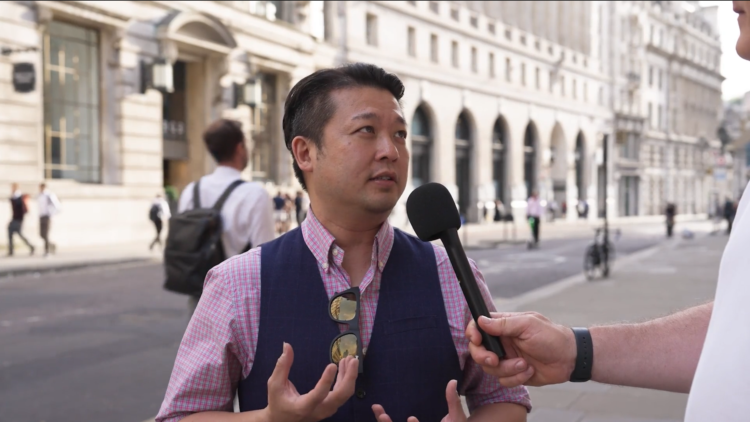
And finally, there was iFOREX, an Israeli brokerage which has grown really large over the past few years. I did some consultancy work there about 20 years ago and was very interested in the company’s proprietary acquisition system which relied on media buyers buying keen deals on ad space globally. In-house designed ad copy was produced and then the system would show which performed best and optimize the ads. Itai Sadeh was recently made CEO, an overall great guy.
iFOREX has managed one of the more quietly elegant developments of the week by bringing Michael Hewson back into the market commentary frame. Michael Hewson is one of those voices that, in this industry, carries a kind of accrued trust simply because it has been around long enough to survive more than one cycle of enthusiasm and disappointment.
For years, his name was effectively part of the CMC Markets furniture, and that made him part of the daily rhythm of retail market commentary for a great many traders. Now he appears under the iFOREX banner, with Itai Sadeh’s team bringing him in at a moment when credibility still matters very much.
That is perhaps the most old-school lesson of the week: in an industry obsessed with speed, infrastructure, alternative data and platform sophistication, the return of a familiar human voice can still matter.
The machines may be faster, the products may be newer, and the market may have learned to speak in tokens, contracts and settlement rails, but it still wants someone who can explain what on earth is going on.
And that, as ever, is the real job.