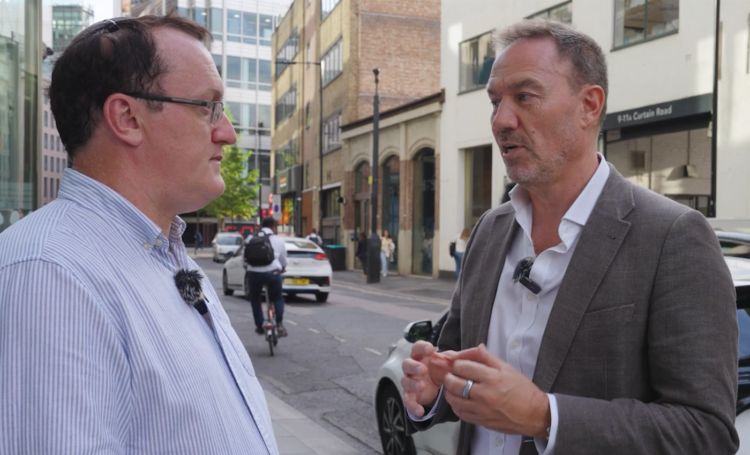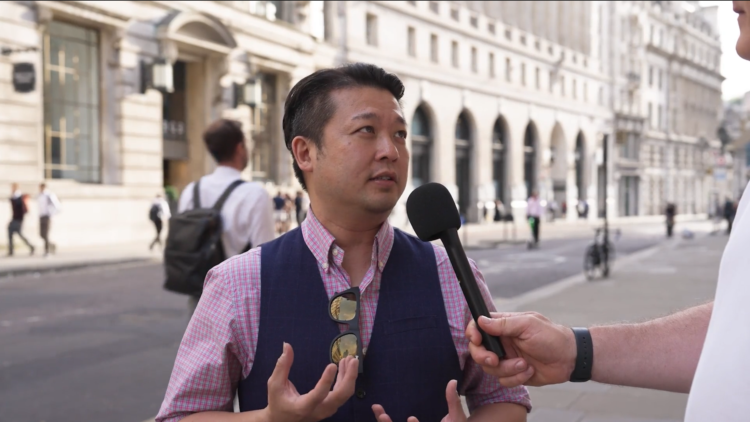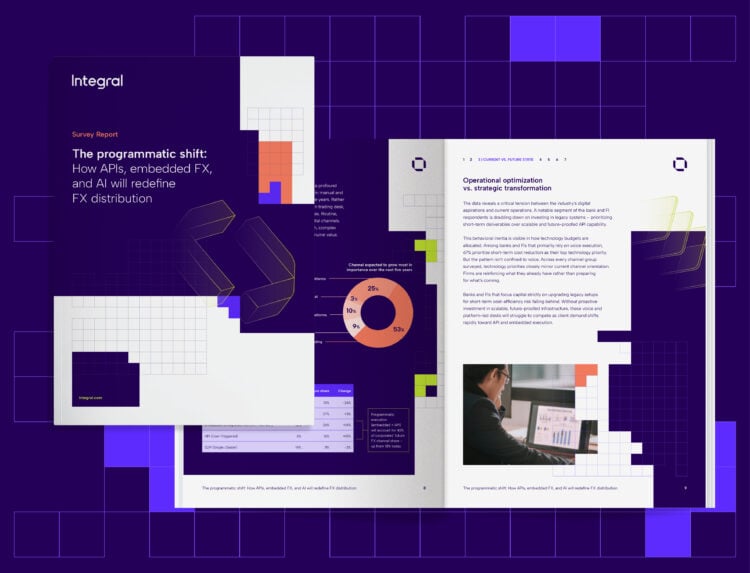


This week’s Integrity navigates retail trading’s week from the perspective of Andrew Saks. It spotlights leaders like Stuart Lane, whose client-first legacy will live on as we all remember his achievements, and forward thinkers like Integral’s Vikas Srivastava, who nailed prediction markets’ mainstream surge via proven venues over gimmicks.
Gold’s historic volatility, a $400 intraday swing, underscores why brokers stick to priced-in strengths like precious metals CFDs, demanding configurable risk engines and LP integration to survive crypto’s retail distractions.
South Korea emerges as the unheralded giant, its $27 billion KRW NDF market drawing Wall Street via Citadel-backed perps, proving APAC’s real action is largely kept quiet, but why?
Monday: In Memory of Stuart Lane
This week began with the sort of news that stops even the most frenetic Monday morning at work in its tracks. Stuart Lane, for many years the quiet force behind Trade Nation and one of the genuine gentlemen of our industry, has left us far too soon.
Stuart’s career mapped the arc of modern retail trading – from City Index and Financial Spreads in the early days of spread betting, through IG Group and ETX Capital, to the business he will be most remembered for building at Trade Nation. As CEO he steered Core Spreads through its rebirth into a brand built deliberately on simplicity, fair pricing and plain English, consciously rejecting the opaque pricing and adversarial mindset that once defined parts of retail FX.
For those of us who knew him personally, the loss is deeply felt. For those who only knew him through the platforms and businesses he helped shape, his influence is baked into many of the standards now taken for granted: clearer pricing, straighter talking, and the idea that “doing business the right way” is not a marketing strapline, but the whole point.
In an industry where rapid development and consolidation is common, Stuart was one of the rare leaders who thought in decades, not quarters. He spent more than 30 years trying to leave retail trading better than he found it. By any reasonable measure, he succeeded. He will be greatly missed.
Tuesday: Prediction Markets Go Mainstream, Integral’s Vikas Srivastava was ahead of the curve
Just a few months back at the first Integral event in Sydney Australia, Integral’s Vikas Srivastava pulled back the curtain on prediction markets exploding across North America.
His point was that gamifying real-world outcomes such as elections, economic data, climate events and weather hooks traders who want the thrill of a bet within the realms of good quality infrastructure and proper venues.
On Tuesday this week it became clear that the idea of the venue mattering more than the novelty was underlined. I noticed that Interactive Brokers executives spoke to the FX industry media about their inclusion of CFTC-regulated ForecastEx contracts into the same TWS interface as stocks, options, and FX. No app-switching, no separate fragmented user experience.
North America’s surge isn’t retail FOMO. It’s sophisticated order flow with real events as the outcomes traders are betting on such as Fed cuts, CPI, midterm elections. Prediction markets aggregate sharper signals than polls because skin stays in the game, however as Vikas noted back in November in Sydney during our panel discussion which I had the pleasure of moderating, distribution only scales when execution survives prime time low latency matching engines, institutional depth, and the level of quality execution that is required for sustainability.
Wednesday: Gold’s $400 Rollercoaster Shows Volatility Brokers Can Actually Trade
This week’s gold carnage, the worst five-session drop since 1983, plunging to $4,098 before a US government announcement caused it to spike $400 in hours, was dissected endlessly across electronic trading forums.
However this was perhaps not so much of a surprise and more of a continuation of the precious metals volatility that first came to my attention in full scale at the iFXEXPO in Dubai, where Bobby Winters and other execs laid it bare: this exact volatility was coming and is now a mainstay of volume and brokerage activity.
This is leading some brokerages toward the idea of eschewing crypto UX reinvention in some cases. Some are beginning to major in what they already own: precious metals CFDs, spot FX, the products they have priced and risk-managed for decades. Crypto giants hoover retail with gamified apps, but their tech spend is years out for most brokers.
There is a caveat though. To be able to cope with such volatile markets, can your matching engine, LP integration, and risk engine absorb 12% silver moves seamlessly? Generic white-labels won’t cut it. You need configurable backends that let you control spreads, position limits, and order routing, not some closed system with a generic back end and no ability to control the destiny of your company.
Brokers who invested in proper LP aggregation and bespoke risk survived acquisition bait. Crypto consolidators sniff weak infra from a mile off. Gold’s chaos hands you the edge if your stack doesn’t melt first, therefore a good quality back end is key to success in cases such as this.
Thursday: Korea: The $27 billion wallflower is now courting Wall Street and going into Perps
South Korea rarely comes up in retail FX conversations, which is curious given the scale of what’s happening there. While the industry has spent years focused on Singapore’s institutional stability, Hong Kong’s bullion markets and Malaysia’s introducing broker networks, that doesn’t mean South Korea lacks a hugely developed local market.
On Thursday it came to my attention that Citadel-backed EDXM International will launch a perpetual futures contract tied to the Korean Won currency by April, targeting the KRW NDF market, which is the world’s largest at $27 billion in average daily volume. KRWQ, an offshore KRW stablecoin, lets traders bet on the won without touching Korean capital controls.
Most crypto traders have never encountered an NDF, but the market is enormous. By contrast, many traditional FX firms that don’t have much interest in going headlong into crypto are looking at expanding to NDFs.
When a currency like KRW can’t be freely traded outside its home country, global investors use NDFs which due to their nature as contracts that track currency movements and pay out in dollars it means that no physical KRW would ever leave South Korea.
South Korea tops this list due to a mismatch: its economy is deeply woven into global supply chains, semiconductors, shipbuilding and its automotive industry, meaning foreign investors carry enormous KRW exposure. But KRW convertibility remains tightly restricted offshore. Hedge funds and macro traders have relied on NDFs for decades.
Such a massive market which is never covered by the electronic trading stalwarts is an interesting dichotomy.
Friday: Retail wants oil perps. The charts say it, the flows say it, and now TradingView is saying it out loud.
On dYdX Foundation’s March analyst call, TradingView’s Ruan Khassan made an observation that should make every product manager at a large crypto venue shift uneasily in their Aeron chair: as oil prices spiked, very few of the top‑10 crypto exchanges had listed oil perpetuals at all. Instead, it was newer platforms, those being Polymarket, Hyperliquid and a handful of others that moved first and soaked up the flow.
That should not be happening in 2026.
Perpetual futures are supposed to be the poster child of the crypto era. Yet when one of the most obvious macro stories of the year erupted, the biggest venues were still wired almost entirely to the old school. Ruan Khassan’s vantage point matters here. TradingView is not a niche charting gadget; it has become the benchmark resource for retail traders globally.
Over the past few years, many brokers have quietly acknowledged this reality by integrating directly with TradingView. Some have gone further and wired the TradingView front end into their own infrastructure so that clients can trade directly from the charts, using the same interface they use for analysis. That is not a cosmetic integration; it is a declaration that your stack is flexible enough to plug into where the traders already are, rather than forcing them into yet another proprietary front end.
And this is where the gap opens.
You can only do that kind of integration if your back end infrastructure allows it, if it can connect to dynamic third‑party tools, support new product ranges like oil perps, and expose the right APIs without restrictions or vendor pushback every time you add a venue or an instrument. If you are still chained to a legacy closed system, where the front end and the risk engine are fused together and controlled by a single vendor, you are effectively locked out of this evolution.
The cost of that inflexibility is twofolddoubled. It is not just about missing the distribution networks; it is also about missing the product cycles.
Retail traders today expect to be able to express a view on the theme of the month – and right now, that includes oil perps. They see geopolitical risk front and centre, they see volatility in energy markets, and they see smaller venues offering exactly the instrument they want: a perpetual contract on oil that trades 24/7 in the same ecosystem as their other positions. When the top crypto venues are late, those traders simply route around them.
For brokers still wrestling with legacy technology, the wake‑up call is clear. Catching up is no longer a matter of adding “crypto” as a tab in a menu or slapping a new UI skin onto a 15‑year‑old stack. It means having infrastructure that allows modern front ends to connect via open APIs, supports rapid onboarding of new derivatives without multi‑year projects, and gives the broker genuine control over risk parameters, margin and routing – rather than locking them into a vendor‑defined template.
Perps are the perfect stress test. They combine high leverage, always‑on markets, funding mechanics, and, in the case of oil, a direct tie‑in to real‑world macro events. If your infrastructure can support that, plugged into a front end that retail traders already trust, you are in the game. If it cannot, you end up watching from the sidelines while newer platforms, with leaner stacks and fewer legacy constraints, pick up the cool new clients.
Ruan Khassan’s comment was not just a criticism of a few slow‑moving exchanges. It was a mirror held up to an industry that still thinks “listing the hot product” is purely a business decision, rather than a technology capability test. Retail has already voted with its charts. The question now is whether the incumbents – in both crypto and traditional retail trading – are prepared to rebuild their plumbing so that next time oil perps are the trade of the year, they are not late to their own party.