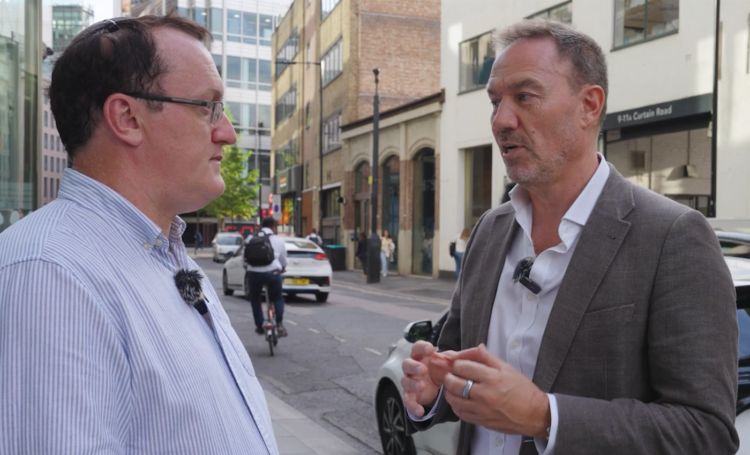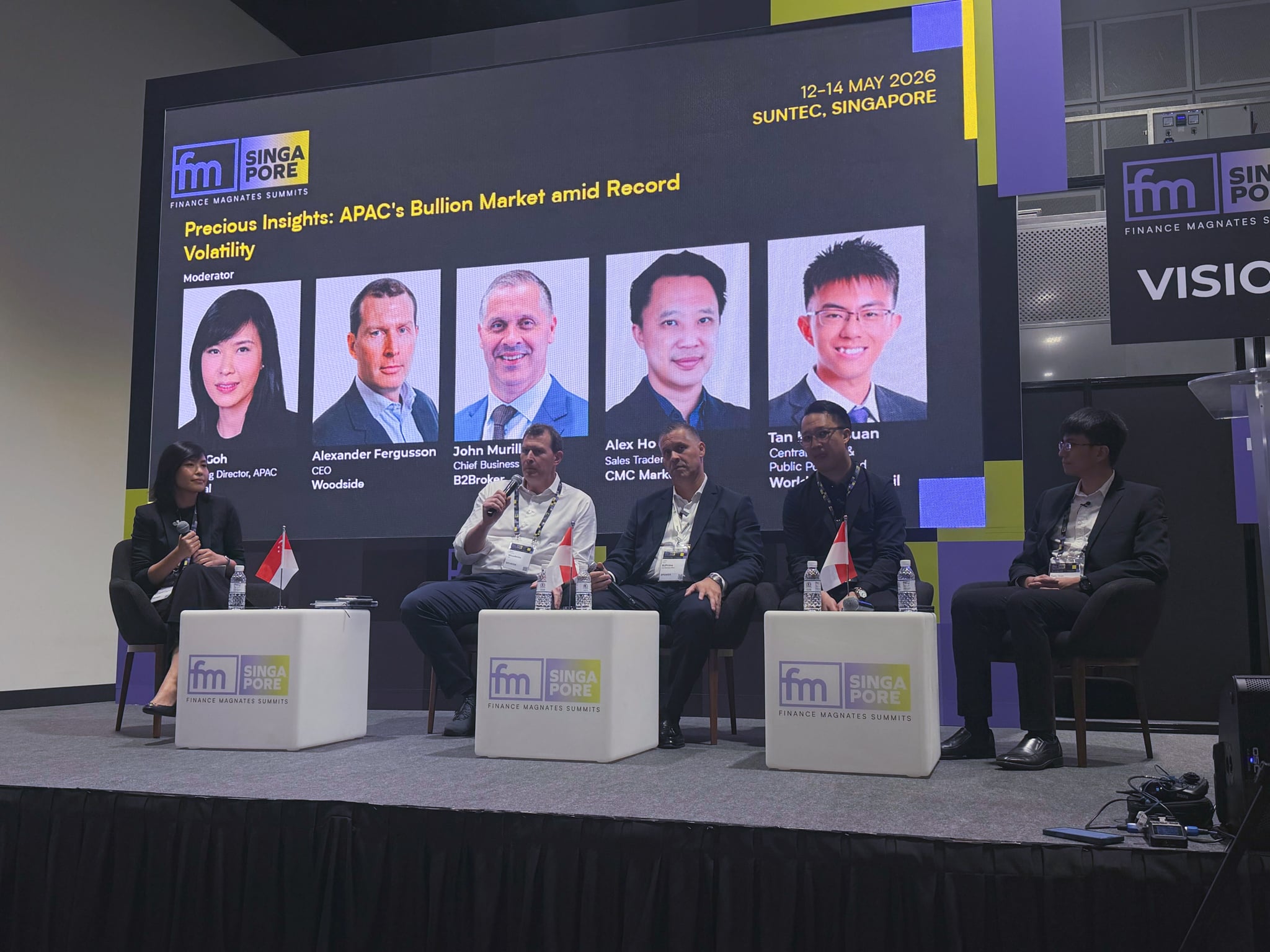
At this year’s Finance Magnates Singapore Summit, the first day’s panel discussion about bullion dealing in the APAC region was skillfully moderated by our own Judy Goh.
The discussion cut straight to the heart of a critical industry matter: APAC’s bullion markets are experiencing record volatility and meaningful structural change. Brokerages that treat precious metals as another CFD product risk being left behind.
The conversation brought together liquidity providers, exchange‑facing market participants, and institutional voices to map what it takes to participate properly in physical metals markets today.
Life beyond spreads
Bullion is not like an FX pair. In physical precious metals, spreads and commissions are secondary to one thing above all else, which is the ability to settle properly.
John Murillo emphasised that market‑rate repricing, LP risk management and the choice of vendor and price‑distribution model can be the difference between survival and ruin in stressed markets. Having lived through events from the Swiss National Bank shock to bank failures, John’s view is blunt: pricing and risk management are not theoretical exercises — they are mission‑critical operational disciplines.
Stress tests expose the gaps
Judy Goh underlined this matter, explaining that stress events are the factor that separates firms that will endure from those that will not. Execution, resiliency, and a tested liquidity framework determine whether a firm rides out volatility or folds under it.
Alex Ho added that trader behaviour has shifted, retail and professional traders now monitor markets continuously through European and US opens rather than checking prices once or twice a day. That persistent presence means orders are live through more of the trading day and are therefore more likely to be filled (and to encounter market stress).
Physical vs CFD: structural differences
A central theme was the structural difference between trading CFDs on bullion and enabling access to physical metal. Gold Silver Central’s model, visible in the room through rows of bullion, coins and vaults, illustrates the contrast: here, ownership of the underlying asset exists. That has profound implications:
- Settlement matters.
Physical trades must clear and be capable of delivery; they are real transfers of value that can be used as collateral. - Liquidity sourcing matters.
Brokers need counterparties that can not only price but also deliver and settle physical metal, and they must be able to connect via institutional APIs.
- Risk management matters.
When volatility spikes, the repricing mechanics used by LPs and the credit/collateral arrangements behind them determine whether liquidity holds.
Tokenisation, collateral and new behaviours
Panelists explored how tokenisation is changing access. Tokenised, vaulted metal lets firms offer fractional ownership and instant trading while preserving linkage to an underlying physical asset. That in turn enables new use cases, borrowing against metal, institutional treasury management, and retail fractional ownership, shifting bullion from a purely speculative instrument toward a multi‑use asset class.
Tan Kway Guan from the World Gold Council framed demand into components: technology (industrial) demand, central‑bank demand, and investment demand.
During recent price moves, tech demand softened while central bank and investment appetite increased. Central banks themselves are returning to gold for diversification and as an inflation/volatility hedge — and smaller central banks in APAC, long absent from the market, are increasingly active again. These flows alter the market’s shape and raise fresh questions about where physical redemption and custody risks sit.
APAC’s role and the geography of liquidity
Judy asked whether London still dictates the market or whether APAC centres are coming into their own. John acknowledged London’s continued centrality but stressed APAC volumes are significant and growing. For brokers, that means establishing credit lines and trusted LP relationships capable of supporting large cross‑jurisdictional flows – particularly in times of stress.
Technology, multi‑currency capability and modern stacks
The panel returned repeatedly to tech. Gold’s trading infrastructure has often been run on legacy systems tied to single‑currency rails. Judy argued for multi‑currency capabilities , trading gold or silver quoted in local currency (SGD, MYR, IDR, etc.) and settling in grams or troy ounces, and Alex Ho noted the gap varies by market: Singapore’s capital markets infrastructure is more advanced than some regions, but even here brokerages must ensure their execution stack holds up under stress.
What differentiated winners from strugglers during the volatility? John’s answer: firms that relied on aggressive retail acquisition with thin capital buffers and outdated infrastructure were exposed; firms with institutional‑grade pricing, robust liquidity management teams, tested execution engines and adequate balance sheets fared far better. The practical questions he urged brokers to ask were simple but revealing: do you have a liquidity management team?
What are your credit lines with LPs? Can your platform maintain throughput under spikes? Can you source LPs that will deliver physical metal, and at what cost?
A diversified precious‑metals landscape
The panel observed a diversification of interest across metals. For the first time in recent memory large volumes have flowed not only in gold but in silver and platinum. Fund managers and institutional buyers who once ignored metals are now considering them as part of cross‑asset strategies, often traded against US treasuries and the US dollar. That institutionalisation magnifies the need for platforms that can support cross‑asset analytics, settlement workflows, and custody arrangements.
Key takeaways for brokerages
- Treat bullion as an asset‑class problem, not a product add‑on.
Physical metals require settlement, custody and counterparty selection capabilities that CFDs do not.
- Build or orchestrate an institutional‑grade back-end.
Scalable engines, tested stress performance, and resilient routing are prerequisites. - Prioritise API connectivity
Comprehensive APIs that connect trading interfaces to liquidity, execution and settlement partners
- Secure liquidity relationships and credit lines
In volatile episodes, LP behaviour determines whether you can continue to serve clients.
- Consider tokenisation and collateral use cases
Tokenised, vaulted metal can increase accessibility while preserving the underlying economic value and collateral utility
- Support multi‑currency pricing and local currency access
Buyers in APAC increasingly want pricing and settlement aligned to local currency units and units of metal (grams/ounces).
- Stress‑test rigorously
Simulate extreme volatility to understand whether pricing, margining and settlement workflows will hold up.
Conclusion
Singapore remains a global bullion hub, geographically and institutionally poised between East and West, and Judy’s panel underlined a plainly urgent message: the historic way of doing things won’t suffice.
Brokers who want sustained participation in precious metals must modernise their technology, rethink liquidity and settlement relationships, and recognise that bullion is not a CFD substitute but a different business requiring different infrastructure.
Judy Goh closed the session with a reminder that the market’s evolution is not only a technical challenge but a strategic one: those who invest in durable infrastructure that is upgradable according to front ends, liquidity integrations, products such as physical delivery, institutional connectivity, and robust risk frameworks will be the firms that not only survive volatility, but thrive in the decade ahead.