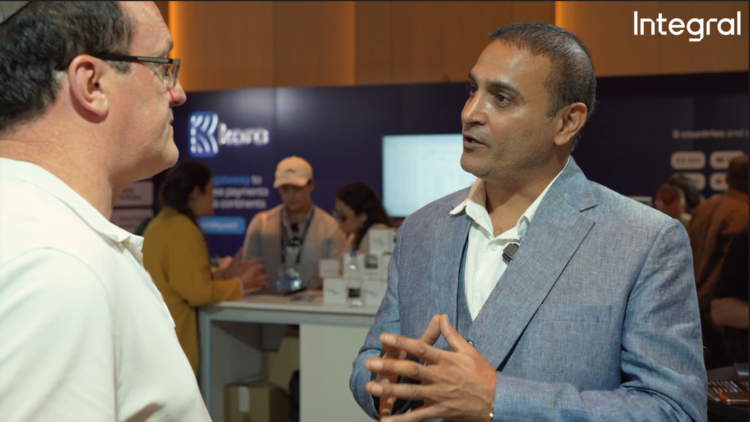


At the LiquidityFinder Autumn Social in London, Matthew Avery, Managing Director EMEA at Integral, discussed the convergence of TradFi and DeFi, the rise of crypto‑native firms acquiring traditional brokers, and what legacy players must do to stay competitive.
From intuitive apps and user experience to tokenised collateral and real‑time margining, the conversation covers why infrastructure choices now determine who will lead the next cycle.
Key themes in this interview
- TradFi + DeFi convergence: Why the mix of senior executives from electronic trading, brokerage, liquidity provision and crypto‑native firms (including BitGo and Binance) at one event points to a structural shift, not just a trend.
- Crypto‑native scale vs legacy brokerage: How digital asset firms have grown to rival and in some cases acquire traditional brokers by combining simple product sets with best‑in‑class, app‑native user experiences.
- Own the front end, outsource the back end: Why brokers should invest in their own branding and UX while leveraging institutional infrastructure (central limit order books, streaming liquidity, multi‑asset pools) from providers like Integral instead of rebuilding core tech in‑house.
- Credit and capital in crypto: How counterparty risk, intraday volatility and collateral constraints are shaping the next wave of innovation, including tokenised collateral and real‑time, on‑chain margining via Integral’s PrimeOne platform.
- The broker’s choice: Firms that adopt flexible, institutional‑grade back ends and design intuitive, super‑app‑like experiences will capture the next generation of clients; those stuck with generic, CFD‑only, legacy stacks risk obsolescence or acquisition.
Why this matters
For brokers, liquidity providers, prime brokers and trading platforms, the implications are direct:
- Differentiation is now UX‑led. Client loyalty is increasingly tied to intuitive apps and seamless onboarding, not just spreads or leverage.
- Infrastructure is strategic. Access to deep, diverse liquidity (FX, CFDs, digital assets) and modern risk/margin engines is a prerequisite for scaling and for offering competitive products.
- Capital efficiency is key. Tokenised collateral and real‑time margining can unlock significant balance sheet capacity in volatile markets, enabling more lending, more trading and tighter risk controls.
Firms that treat technology as a core strategic asset not just a cost centre will be best positioned to compete with crypto‑native giants and to avoid becoming cheap acquisition targets themselves.
Watch the full interview