FX market structure needs to take more than a safe single
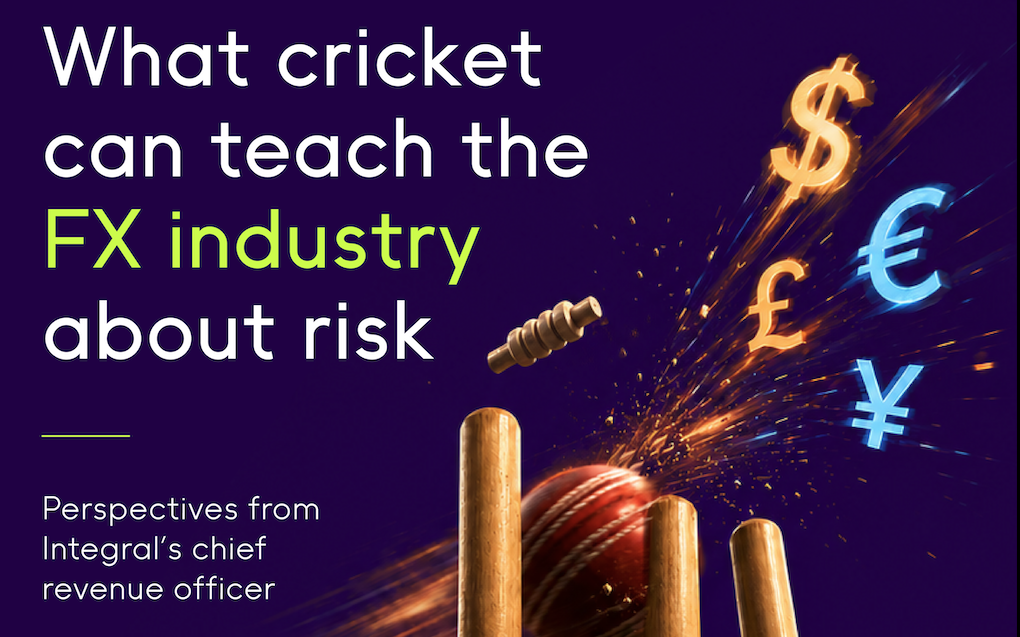
Ben Stokes revolutionised English cricket by fundamentally changing how the Test team approached risk and decision-making under uncertainty. A not so dissimilar shift in mindset around risk is taking place across global FX markets. With liquidity more fragmented than ever, prices disappearing in milliseconds and the perfect quote no longer there when a trader tries to hit it, participants increasingly recognise that risk cannot be eliminated by relying on a single provider, venue, or price stream.
A constantly moving market
The traditional approach to risk management was built on the need for more information and greater certainty before acting. But today’s market structure is testing that mindset to its limits. Liquidity is dispersed across investment banks, non-bank market makers, ECNs and numerous trading venues.
These days, market conditions can change faster than a Jofra Archer bouncer. As such, the challenge is not so much finding a price as finding the best executable outcome in a market that is constantly moving.
This is why liquidity aggregation has become such an important part of modern FX market infrastructure. Aggregation is often seen as a way of accessing more liquidity, but its real value lies in giving market participants greater choice and flexibility.
Rather than relying on a single provider or a single stream of liquidity, firms can assess multiple sources simultaneously, improve resilience and reduce dependency on any one provider.
When prices are moving rapidly, that flexibility can be as valuable as price itself. Consider an unexpected central bank announcement as a prime example. The headline hits the wires and, within a matter of seconds, markets are repricing. Prices jump, spreads widen and liquidity can appear and disappear almost instantaneously.
A trader may see an attractive quote on screen, only for it to vanish before an order can be executed.
In those critical moments, certainty of execution is often more important than securing the lowest displayed price. A firm connected to multiple sources of liquidity has alternatives. It can route orders differently, access deeper pools of executable liquidity and adapt as market conditions evolve.
The evolution of FX market structure
In more benign markets, the difference may be measured in fractions of a basis point. However, on a day when prices are moving sharply, it can mean the difference between executing efficiently and not executing at all.
The evolution of FX market structure is forcing firms to rethink long-held assumptions about risk. The objective is no longer to eliminate uncertainty. Let’s face it, that was never possible.
The aim is to build the technology, connectivity and intelligence needed to respond effectively when uncertainty arrives.
Stokes’ real contribution to cricket was changing the conventional view of when and how risk should be taken throughout a Test match. As liquidity continues to fragment across FX markets, firms are increasingly recognising that execution risk cannot be eliminated by relying on any single source.
Instead, risk is managed through greater visibility, broader market access and the optionality to adapt as conditions change. The firms best positioned to manage uncertainty are those equipped to respond when certainty inevitably disappears. They’ll be the ones with enough optionality that losing one won’t cost them the innings.