

Monday: Crypto Meets Legacy FX once again
As this week started, I couldn’t help noticing a number of voices across the electronic trading industry once again looking at the way FX brokers piling into crypto are tripping over the same old mistakes, including leaning too hard on internalisation that works fine in steady FX but blows up amid crypto’s chaos, plus fumbling settlement headaches and clunky legacy tech. Check my full take:
One-stop FX & Crypto: Strategic Pitfalls and the Infrastructure Reckoning
It lays out the pitfalls with a quick three-question gut check on your ops.
Being able to do this properly means moving toward infrastructure that allows your brokerage full control over its operations, replacing rigid back-ends with something like Integral’s SaaS stack.
Tuesday: Korea’s Stablecoin quantum leap
Spotted this morning in the news from South Korea: A firm in Seoul just wrapped a proof-of-concept with Suho.io for stablecoin FX settlement, real-time swaps of dollar assets and tokens, auto-triggered on preset rates and conditions.
No T+2 dawdle, just instant execution on their infrastructure, with smart contracts nailing KYC/AML checks, trade halts, and address freezes pulled straight from Circle and Paxos blueprints.
They’re now testing the full stack including issuance, remits and settlement while introducing custodians and payments firms.
This drops a live grenade into FX’s SWIFT stranglehold With stablecoin volumes already nipping at mid-tier pairs, brokers ignoring on-chain pilots today get buried tomorrow.
Integral’s own CEO, Harpal Sandhu mentioned the stablecoin-based settlement revolution that needs to take place back at the end of November last year in London, and how PrimeOne intends to ensure a highly efficient settlement ecosystem for electronic trading and move away from the barriers put in place by banks and the slow one way street provided by the banks.
Wednesday: From Bullion Boom to Tech Reckoning in Singapore
Singapore’s FX scene, renowned as a rock-solid institutional base and interbank dealing center sets the stage for this month’s Finance Magnates Summit, where retail brokers will rub shoulders with the large institutions.
Gold’s been a beast lately, and today’s word confirms Integral senior executive Judy Goh will be on the Precious Insights: APAC’s Bullion Market amid Record Volatility panel, debating this hot topic with B2Broker’s John Murillo.
When this volatility burns out, what then? Pricing normalises, liquidity dries up in spots.
Judy will cover these topics in detail. Singapore’s metal trading roots run deep; her take could expose where retail FX brokers need to grow their infrastructure to be able to continue to operate in the bullion and wider precious metals markets, and this comes at a poignant time as I recently explained how brokers should not rest on their laurels and just reap the profits now while ignoring the need to reinvest in their tech so that they can expand to new markets when the volatility dies down.
Modern traders, IBs, and affiliates aren’t impressed by dinosaur UIs anymore, they live in Grab, WhatsApp, and seamless banking apps. Why would they tolerate clunky front ends when the future’s already here, one core powering potentially thousands of custom white-labels via API, letting every client or partner spin up their own skin?
Thursday: Bots, APIs, and the Rise of the Automated Retail Trader
Caught Up with Oleg Giberstein from Coinrule
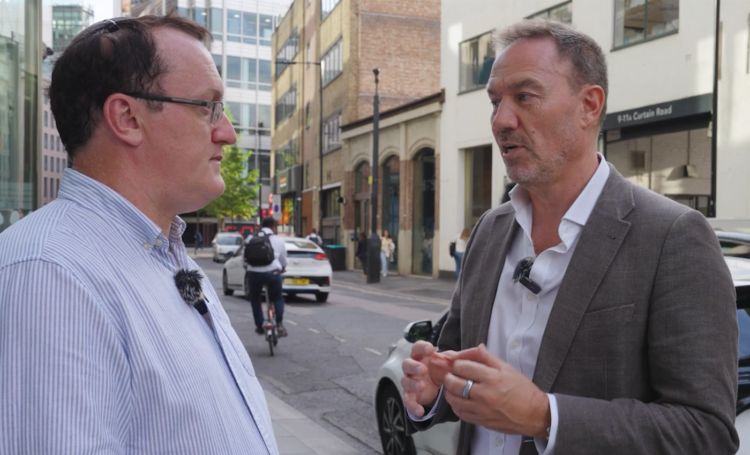
Reflecting on yesterday’s meeting with Oleg Giberstein, Coinrule’s driving force, during which we mulled over a topic that’s an important consideration for multi-product brokerages: slotting crypto trading bots into the mix. With third-party dynamic tools now in high demand from an ever more sophisticated retail audience, brokers need flexible architecture to let clients plug in without predetermined restrictions.
Oleg laid it out clean: API connectivity plus adaptability and choice of front ends turn rigid FX desks into bot-ready hubs.
Retail traders increasingly want automation, therefore Coinrule’s bots handle if-then crypto scenarios – for example BTC dumps 5%, short EURUSDC, a departure from having to manually analyze charts.
The backend’s the linchpin: high-calibre multi-tenant cores like Integral’s SaaS, trusted by banks for siloed security across thousands of tenants. One codebase powers affiliates, white-labels, partners, each running their front-end skin atop it, with the ability to add bots for specific purposes and specific product ranges.
Brokers ignoring this could find that their clients bolt to crypto-native shops. Oleg nailed it: automation’s retail standard now.
My podcast with Oleg in which we go into more detail will be published soon.
Friday: Prediction Markets: From Sideshow to Revenue Engine
Hyperliquid testing prediction markets on its own derivatives stack is exactly the sort of move that tells you this thing is moving from novelty to product.
It also fits neatly with what Integral’s Vikas Srivastava has been saying for some time, most notably at the Integral event in Sydney last November, that being prediction markets are becoming one of the more interesting ways to keep traders engaged.
The numbers are hard to ignore. Reports late last year suggested the sector could be worth $8 billion, with more than 10 million active users, while Polymarket and its peers have already shown what happens when the format catches fire. For FX and CFD brokers, that is not just a curiosity; it is a potential revenue line. The problem, as ever, is that most broker back ends were not built for this kind of fast-moving, event-driven product.
That is where the real question begins. Prediction markets are not just about price discovery; they are about packaging real-world outcomes in a way that feels intuitive, immediate and add a bit of excitement to the user experience.