Prop Firms, Diversification and the Multi-Asset Imperative
Dubai’s iFX EXPO has once again proven why it’s the crossroads of electronic trading.
Executives from every corner of the industry – prop firm founders, legacy FX brokers, fintech vendors and data providers – are converging here not just to network, but to grapple with a market that feels more volatile and fragmented than ever.
Three major themes dominated the corridors and panel rooms at the conference:
- The relentless surge in precious metals volumes,
- The rise of young, aggressive prop firms as acquisition predators, and
- An urgent push toward multi-asset platforms that can handle everything without breaking stride
Precious Metals Hijacked the Conversation
Gold and silver aren’t just hot; they’re overwhelming some brokers’ order books. Multiple executives reported 70-80% of recent volumes concentrated in XAU and XAG, a level of single-asset dominance that hasn’t been seen since the early crypto mania. One European broker with a Dubai outpost bluntly told us they’ve launched a bespoke gold CFD to capitalise on the rush, explicitly steering clear of spot crypto for now. Liquidity headaches, particularly around silver, were a recurring gripe – relationships strained, pricing erratic. Yet beneath the excitement lies a quiet strategic debate: is this a sustainable pivot, or just another volatility wave to surf? Most agreed it’s the latter. Basing a multi-year roadmap on one instrument’s spike feels shortsighted when crypto, futures and tokenised assets are structurally reshaping client demand.
Prop Trading Boom
Prop firms, meanwhile, aren’t content playing second fiddle. Led by a new generation of dynamic, often under-40 executives, they’re no longer the scrappy upstarts of five years ago. With funded trader programmes now mainstream, these firms have built war chests and client loyalty that let them eye acquisitions of traditional CFD brokers. The irony? They bring firepower and slick UX, but often lack the three-decades-deep operational DNA of FX incumbents. That gap is closing fast through M&A, forcing legacy players to ask hard questions about their own tech stacks.
Justin Hertzberg, CEO of FPFX Tech, told us at iFX EXPO Dubai 2026:
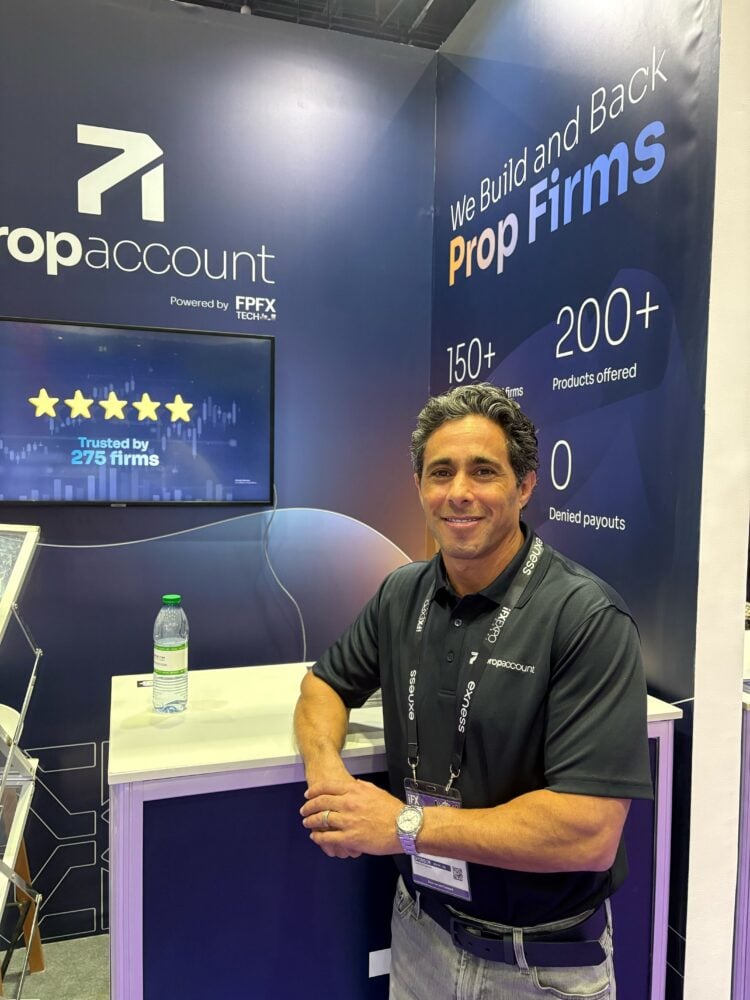
Over the last year and a half, we’ve seen a massive uptick in our white-label business at PropAccount.com as prop firms face margin pressure from price wars and looser challenge conditions that let more unqualified traders through. The infrastructure burden is huge, including PSP minimums, multi-platform integrations, data feeds for FX, crypto, futures. It all stacks up fast. Our model lets 150+ firms license our tech, leverage our shared payments, platforms and capital, turning fixed costs negligible so they can focus on branding and growth while we handle the ‘unsexy’ back-end ops, risk and scaling. It’s a separation of powers that’s outpacing standalone prop firms by miles.
Infrastructure Imperative
That shared infrastructure theme is a clear talking point at this year’s iFX EXPO Dubai: a comprehensive back end that facilitates genuine multi-market and multi-product capabilities across FX, crypto, futures, fixed income and beyond is no longer optional – it’s the backbone that lets firms scale without drowning in costs or complexity. Whether through white-label delegation like PropAccount.com’s model or managed data services from providers like OptionsIT, the focus is on owning growth, not ops.
Paul Cairns, Senior Sales Director at OptionsIT explained.
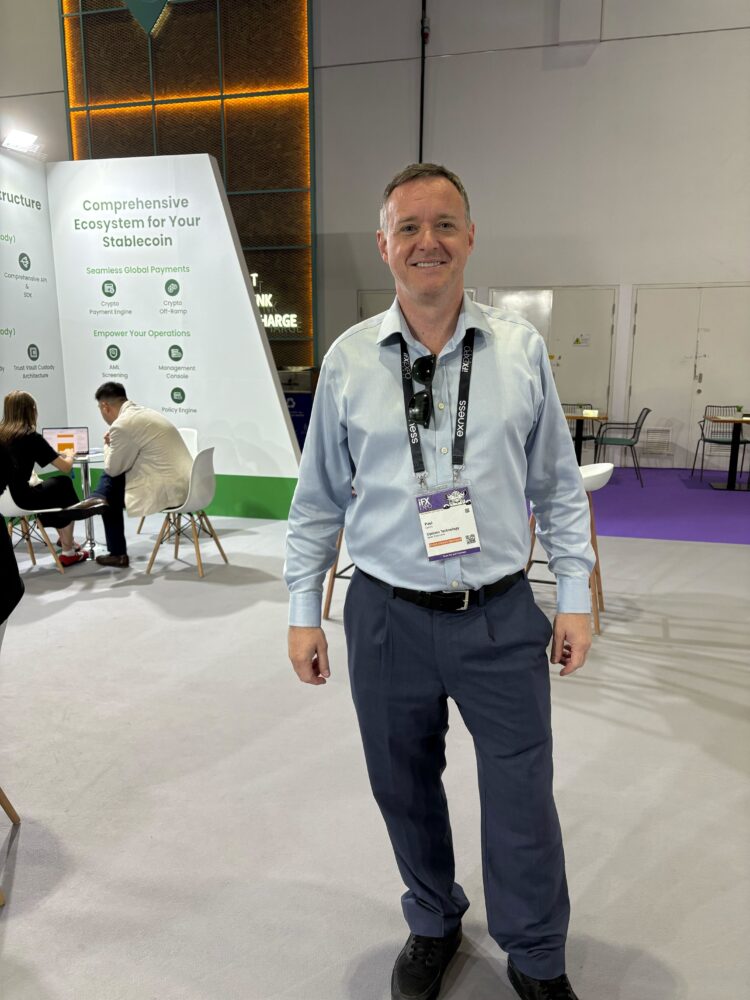
“We’re seeing brokers like CMC Markets take full control of data ownership and redistribution. Firms don’t have to own their data infrastructure outright, they can delegate that to us. In fixed income, where brokerage demand is surging, others prefer a managed approach that lets them focus on growth without building everything in-house.
Cairns’ point underscores a broader truth: as fixed income creeps into retail and semi-pro portfolios, data control becomes table stakes, whether you insource it or outsource the heavy lifting.
From Regional Hub to Global Multi-Asset Gateway
Multi-asset capability emerged as the event’s gravitational centre. Clients don’t segment their risk anymore – FX majors, crypto pairs, gold CFDs and listed futures all live under one login for the modern trader. Brokers stuck on legacy, front-end-first platforms are struggling to keep up, their “one-size-fits-all” interfaces no match for prop firms’ intuitive apps. Dubai’s unique position amplifies this: firms that started here for tax advantages and market access are now serving clients from Europe, APAC, MENA and beyond, each demanding tailored tools, languages and asset classes.
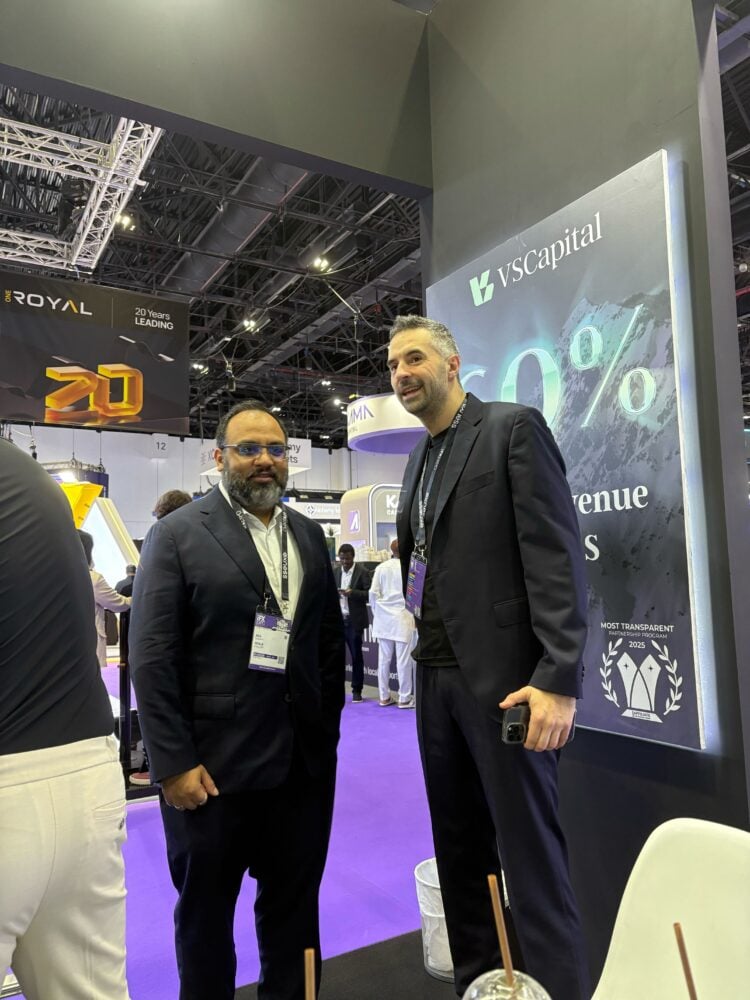
Andrey Stoychev, CEO and founder of VSCapital, captured it perfectly:
Dubai is a central point of the FX industry these days, just like it is for other global, tech-led business sectors. Therefore being here exposes brokerages to a large cross-section of firms from different regions with different requirements. For this reason, brokers need to be able to adapt quickly so that they can attract a range of astute traders with different trading methods.
What ties these threads together is infrastructure. Volatility in metals tests your liquidity pipes. Prop acquisitions threaten your independence unless you control your IP. Multi-asset demand demands a back end that can orchestrate FX, crypto, fixed income and beyond under one coherent risk model.
Iurii Riabykin, Chief Business Development Officer at Transact365 said
As much as iFX EXPO is about technology and product, it’s still a people business. Events like this, and ICE in Barcelona before it, are invaluable for networking, meeting existing clients and finding new partners. In payments it’s all about tech, product and coverage including what you can and can’t do, how quickly you can onboard, but in the end, relationships matter most.
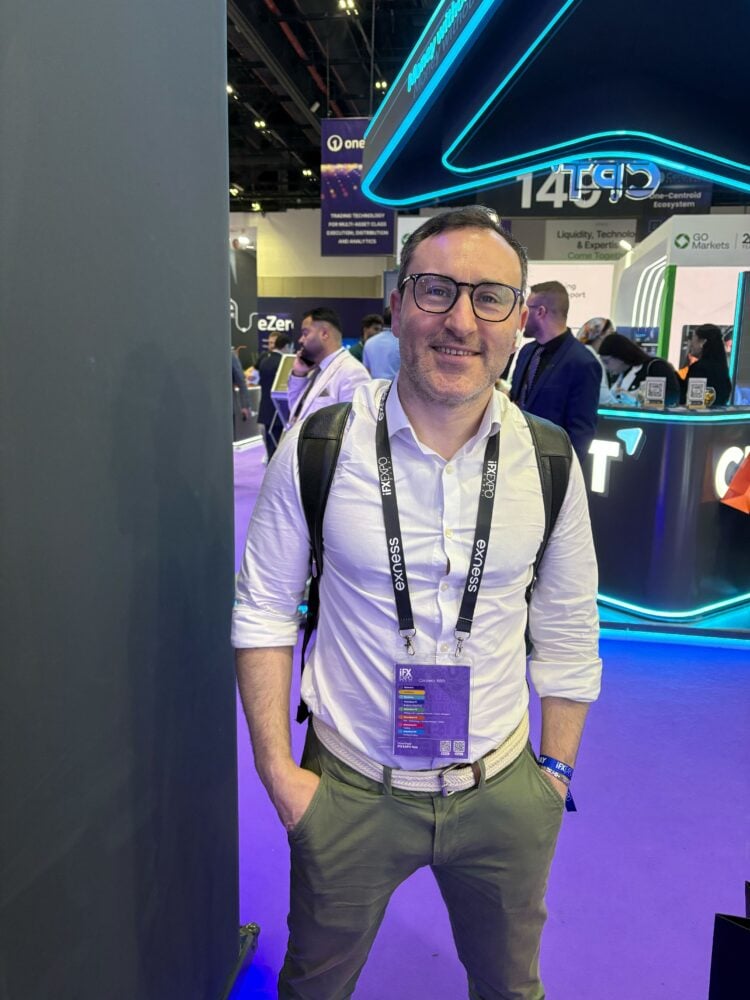
Iurii continued,
People will often pay more and not care about price if they trust you. Here in Dubai you see the hot areas clearly: Southeast Asia, LATAM payment solutions, how to move money in African markets. It underlines how international you have to be and how vital it is for FX brokers to have broad, stable coverage with a reliable partner. There’s a strong mix here of brokers, LPs, CRMs, crypto firms, both established names and new challengers, including seasoned executives who’ve left big institutions to start something new. It’s a dynamic business in a dynamic region.
Closing thoughts from Dubai
The executives I spoke to in every area of the industry agreed: the days of generic platforms are over. Success now hinges on owning your direction, whether through proprietary builds or smart SaaS partnerships. iFX EXPO Dubai 2026 isn’t just a trade show; it’s a litmus test for who’s ready for that shift.